Services
E-commerce development: custom online stores
A template store sells a product. A store built around your buyer sells the decision: it helps an agronomist find the right product for a crop, a car buyer see the full import cost, a B2B client reorder in two clicks. That is the e-commerce development we do — custom online stores where the catalogue, the calculators and the account work the way your customers think.
We build the storefront and everything behind it: product data, prices and stock, card payments through WayForPay or Stripe, orders, the customer’s account and history, and the admin your team runs it from. Where a buyer needs a person, a callback or a consultation request is one click away.
Already selling on a platform that no longer fits? We can build your own store and move the catalogue and customers into it.
- Price
- Fixed after scoping
- Payments
- By stage, held until you accept
- Team
- Our own engineers, Kyiv
- Contract
- Signed online, scope locked
E-commerce development
What we build
Catalogue and search
Filters by what your buyers actually search for — category, use, stock — with rate, packaging and price on every card.
Product and category pages
Pages that answer the questions a buyer asks before paying, and that rank for them in search.
Calculators and configurators
Cost, dosage or import calculators that turn a hard decision into a number.
Checkout and payments
Cart, delivery options, card payments and invoices for companies.
Customer accounts
Addresses, order history, repeat orders and B2B prices for signed-in customers.
Admin and integrations
Products, prices, stock and orders in one place, synced with your accounting or warehouse.
How it works
From a brief to an accepted product
The same five steps for every project, whatever we build. You always know what is agreed, what is paid and what is done.
Estimate
Describe the product in your own words, add a link or a file. In about 15 seconds you see the modules, the hours, the timeline and a price.
Team review
Our team reads the brief and the estimate, asks about anything unclear in your cabinet or on a call, and confirms the scope and the price. Nothing starts before that.
Contract
You sign a contract online: a fixed price, the scope split into modules, and a payment schedule — in full or by stages.
Milestones
We build module by module. QA checks each one before it reaches you, and the cabinet shows the work as it moves.
Acceptance
You have 7 days to review each module: accept it or send it back with a list of fixes. Your money stays in the project reserve until you accept.
Three formats
Choose how we build it
The format decides who writes the code and how much engineering review goes into it — and with that, the price and the pace.
- AI / build
AI Build
Fastest path · prototypes & internal tools
AI generates the structure and most of the implementation. Engineers review integrations and the release. The lowest cost, for prototypes, internal tools and MVPs that test an idea.
- AI / engOur pick here
AI + DEV
Recommended for most MVPs
AI builds the scaffolding and the obvious parts. Engineers own the architecture, critical logic, integrations and full QA. Balanced pace and review, for customer-facing MVPs and B2B products.
- full / eng
DEV
Maximum quality & control
Senior developers own architecture and implementation end to end. AI is an internal tool for speed, never the final author. For production systems and regulated domains.
A store with a standard catalogue and checkout fits AI + DEV: AI builds the familiar screens, engineers own payments, integrations and SEO. A one-off promo shop can go AI Build. Large catalogues with complex B2B pricing and integrations deserve DEV.
Cases
Work that proves it
 TAMIS AGROtamisagro.com.ua / agro e-commerce / 2026
An online store for biological crop protection
Read the case → BIBI CARSbibicars.bg / crm & storefront / 2026
Car import from US and Korean auctions, end to end
Read the case →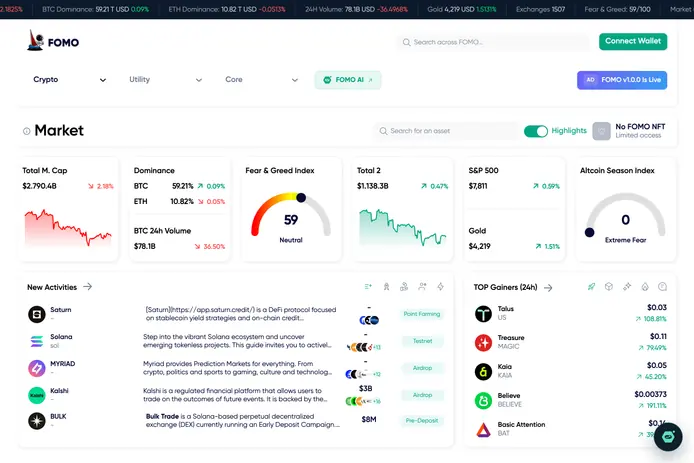 FOMOfomo.cx / crypto intelligence / 2026
Crypto market intelligence in one place
Read the case →FAQ
Questions we get asked
How much does it cost to develop an online store?
It depends on the catalogue, the checkout, the integrations and extras like calculators or B2B prices. The estimate gives a first price in about 15 seconds; after the team review the price is fixed in the contract.
A custom store or a platform like Shopify?
If a platform covers your catalogue and checkout, start there: it is cheaper. Build your own when the way you sell doesn’t fit a template — expert selection, calculators, B2B prices and accounts, unusual integrations — or when platform fees and paid add-ons start to cost more than owning the store.
Which payment methods can you connect?
Card payments through WayForPay or Stripe, invoices for companies, and cash on delivery if your logistics support it. Other providers are connected through their APIs.
Will the store be good for SEO?
Yes, it is built for it: pages rendered on the server, clean URLs, structured data for products, fast loading, and pages for the questions buyers actually search for.
Can you connect the store to our accounting or warehouse?
Yes, if they have an API or an export we can read. Prices, stock and orders sync on their own, so nobody retypes them.
Who runs the store after launch?
Your team, from the admin we build with the store: products, prices, stock, orders and content. Defects in our code reported within 30 days of acceptance are fixed free of charge; new features start with a new estimate.
Services
Related services
- Marketplace developmentTwo-sided platforms: listings, bookings, payments held until the job is done, reviews, disputes and an admin.
- Web application developmentClient portals, B2B platforms, SaaS and dashboards — and the fast public sites in front of them.
- CRM and internal systemsDeal pipelines, documents, client cabinets and reports, built around the process your team actually runs.