
Services
AI app development and AI integration
AI is useful to a business when it answers from the business’s own data, says where the answer came from and stays inside clear limits. That is how we approach AI app development: assistants that read your catalogue, documents or market data; automations that sort, extract and summarise; analysis that turns many noisy sources into one read.
We use AI in two ways, and it helps to keep them apart. One is in the product: features your users see. The other is in how we build: in AI Build and AI + DEV, AI writes much of the routine code and engineers review it. You can have either without the other.
Our own estimator is an example of the first kind: it reads a brief, a PDF, a Word file, an image or a link and turns it into modules, hours and a price in about 15 seconds.
- Price
- Fixed after scoping
- Payments
- By stage, held until you accept
- Team
- Our own engineers, Kyiv
- Contract
- Signed online, scope locked
AI app development
What we build
Assistants on your data
Chat or search that answers only from your documents, catalogue or platform data, with links to the sources.
Document and image reading
Fields pulled out of PDFs, Word files, photos and scans, and put where your team needs them.
Classification and routing
Requests and tickets sorted by topic and urgency, each sent to the right person.
Analysis and scoring
Signals from many sources combined into one score, with the places where the sources disagree shown, not hidden.
AI inside existing products
An AI feature added to a system you already run, through its API, without rebuilding it.
Guardrails and monitoring
Limits on what the model may answer, a log of what it did, and new models tried in shadow mode before they speak to users.
How it works
From a brief to an accepted product
The same five steps for every project, whatever we build. You always know what is agreed, what is paid and what is done.
Estimate
Describe the product in your own words, add a link or a file. In about 15 seconds you see the modules, the hours, the timeline and a price.
Team review
Our team reads the brief and the estimate, asks about anything unclear in your cabinet or on a call, and confirms the scope and the price. Nothing starts before that.
Contract
You sign a contract online: a fixed price, the scope split into modules, and a payment schedule — in full or by stages.
Milestones
We build module by module. QA checks each one before it reaches you, and the cabinet shows the work as it moves.
Acceptance
You have 7 days to review each module: accept it or send it back with a list of fixes. Your money stays in the project reserve until you accept.
Three formats
Choose how we build it
The format decides who writes the code and how much engineering review goes into it — and with that, the price and the pace.
- AI / build
AI Build
Fastest path · prototypes & internal tools
AI generates the structure and most of the implementation. Engineers review integrations and the release. The lowest cost, for prototypes, internal tools and MVPs that test an idea.
- AI / engOur pick here
AI + DEV
Recommended for most MVPs
AI builds the scaffolding and the obvious parts. Engineers own the architecture, critical logic, integrations and full QA. Balanced pace and review, for customer-facing MVPs and B2B products.
- full / eng
DEV
Maximum quality & control
Senior developers own architecture and implementation end to end. AI is an internal tool for speed, never the final author. For production systems and regulated domains.
AI features that answer customers or touch money belong in AI + DEV or DEV: engineers own the prompts, the data access and the limits, and QA tests the failures, not just the happy path. AI Build suits internal automations where a person checks the output.
Cases
Work that proves it
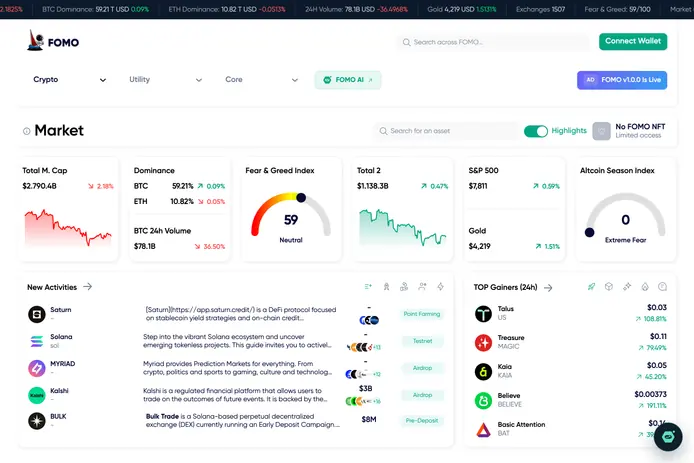 FOMOfomo.cx / crypto intelligence / 2026
Crypto market intelligence in one place
Read the case → TAMIS AGROtamisagro.com.ua / agro e-commerce / 2026
An online store for biological crop protection
Read the case →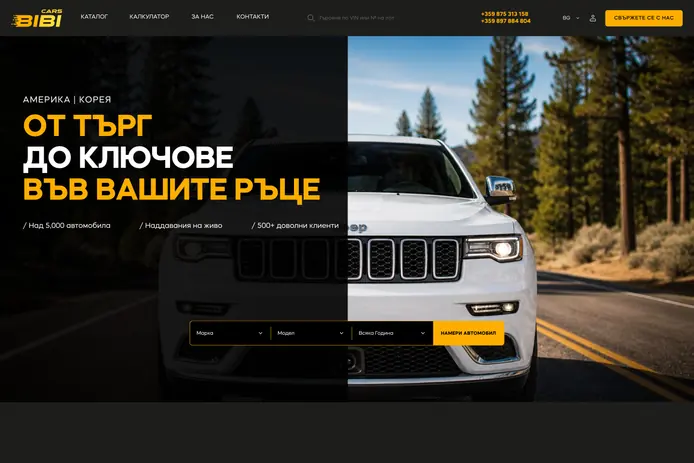 BIBI CARSbibicars.bg / crm & storefront / 2026
Car import from US and Korean auctions, end to end
Read the case →FAQ
Questions we get asked
How much does AI app development cost?
The AI part is usually a few modules inside a larger product: data access, the model integration, guardrails and an interface. The estimate prices them like any other module. The model provider’s usage fees are separate from the contract price and depend on traffic; we size them with you at the team review.
Which AI models do you work with?
We choose per task: large language models from the main providers for text and reasoning, vision models for images and documents, and smaller models where speed or cost matter more. The model sits behind its own layer, so the product isn’t tied to one vendor.
Will the AI make things up?
It can, which is why we design against it: the assistant answers from your data, cites its sources and says it doesn’t know when the data has no answer. Risky actions stay with a person.
Is our data safe?
Only what a feature needs goes to the model provider, and access is checked on our side first. Personal and confidential data can be masked or kept out of prompts entirely.
What does AI-written code mean for my product?
In AI Build and AI + DEV, AI writes part of the code and engineers review it — lightly in AI Build, fully in AI + DEV. In DEV, senior engineers write the code and AI is only an internal tool. Whichever format you choose, every module comes to your cabinet for review and acceptance.
Can you add AI to the system we already have?
Yes, if it has an API or a database we can reach. We add the feature as a separate module, connect it to your data and leave the rest of the system as it is.
Services
Related services
- Custom software developmentPlatforms, apps and internal systems built for how your business works, for a price fixed before work starts.
- Web application developmentClient portals, B2B platforms, SaaS and dashboards — and the fast public sites in front of them.
- CRM and internal systemsDeal pipelines, documents, client cabinets and reports, built around the process your team actually runs.