Services
Custom CRM development and internal systems
An off-the-shelf CRM is fine until your process stops fitting its fields. Then managers keep the real pipeline in messengers and spreadsheets, and clients call to ask where things are. Custom CRM development fixes that: we build the system around the process you actually run — your stages, your documents, your roles.
A good internal system makes one thing impossible: moving a deal forward without the document or the payment behind it. It shows each role the same record at its own level of detail — the manager’s pipeline, the team lead’s overview, the client’s cabinet — and keeps a trail of who did what.
We build it for a fixed price under a contract, module by module, so your team can start using the first stages while the rest is still in work.
- Price
- Fixed after scoping
- Payments
- By stage, held until you accept
- Team
- Our own engineers, Kyiv
- Contract
- Signed online, scope locked
CRM and internal systems
What we build
Deal pipelines
Explicit stages with owners, deadlines and the documents each stage needs, from the first request to the handover.
Client cabinets
Clients follow their order, sign contracts and pay invoices online instead of calling the manager.
Documents and e-signatures
Contracts, invoices and acts generated from the deal’s data and signed inside the system.
Roles and permissions
Admin, team lead, manager, client: each sees what their job needs and nothing else.
Integrations and parsers
Data pulled in from your sources — marketplaces, auctions, accounting, email — instead of copied by hand.
Reports and audit
Live numbers for the pipeline and the team, and a log of every sensitive action.
How it works
From a brief to an accepted product
The same five steps for every project, whatever we build. You always know what is agreed, what is paid and what is done.
Estimate
Describe the product in your own words, add a link or a file. In about 15 seconds you see the modules, the hours, the timeline and a price.
Team review
Our team reads the brief and the estimate, asks about anything unclear in your cabinet or on a call, and confirms the scope and the price. Nothing starts before that.
Contract
You sign a contract online: a fixed price, the scope split into modules, and a payment schedule — in full or by stages.
Milestones
We build module by module. QA checks each one before it reaches you, and the cabinet shows the work as it moves.
Acceptance
You have 7 days to review each module: accept it or send it back with a list of fixes. Your money stays in the project reserve until you accept.
Three formats
Choose how we build it
The format decides who writes the code and how much engineering review goes into it — and with that, the price and the pace.
- AI / build
AI Build
Fastest path · prototypes & internal tools
AI generates the structure and most of the implementation. Engineers review integrations and the release. The lowest cost, for prototypes, internal tools and MVPs that test an idea.
- AI / engOur pick here
AI + DEV
Recommended for most MVPs
AI builds the scaffolding and the obvious parts. Engineers own the architecture, critical logic, integrations and full QA. Balanced pace and review, for customer-facing MVPs and B2B products.
- full / eng
DEV
Maximum quality & control
Senior developers own architecture and implementation end to end. AI is an internal tool for speed, never the final author. For production systems and regulated domains.
A CRM carries your money and your clients’ data, so we usually build it in AI + DEV, with engineers owning permissions, documents and integrations. A simple internal tool for one team can go AI Build. Choose DEV for regulated processes: finance, medicine, hazardous goods.
Cases
Work that proves it
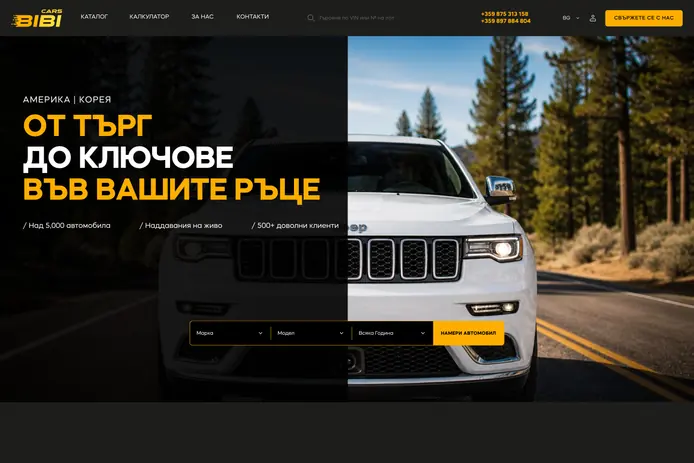 BIBI CARSbibicars.bg / crm & storefront / 2026
Car import from US and Korean auctions, end to end
Read the case →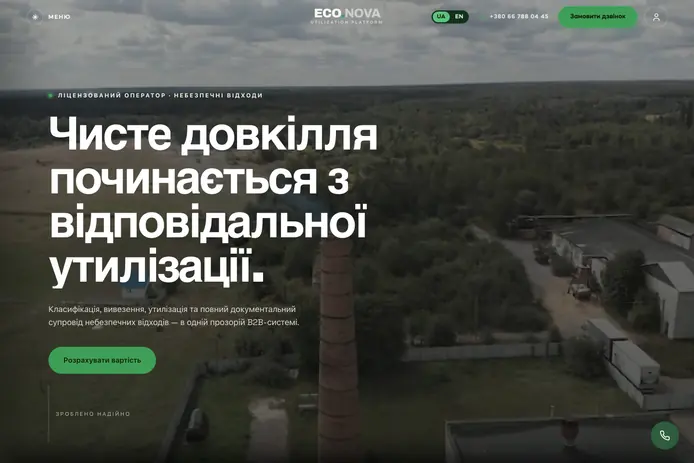 ECO.NOVAb2b / operations platform / 2026
Hazardous waste disposal as a transparent B2B service
Read the case →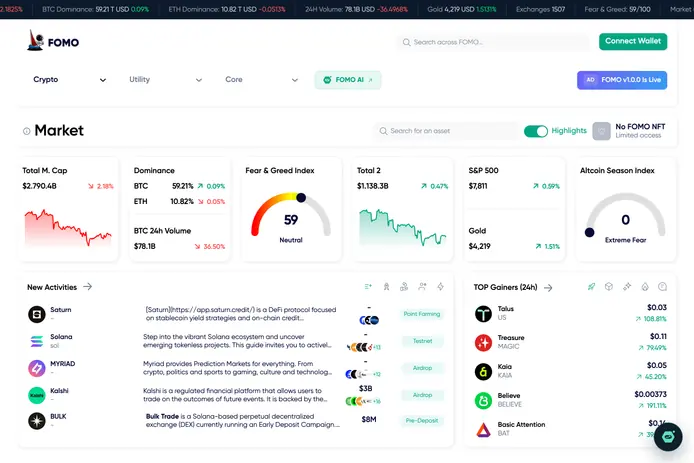 FOMOfomo.cx / crypto intelligence / 2026
Crypto market intelligence in one place
Read the case →FAQ
Questions we get asked
How much does custom CRM development cost?
It depends on the stages, roles, documents and integrations, so we price by module. The estimate gives a first figure in about 15 seconds, the team review confirms it, and the contract fixes it.
Why build a CRM instead of buying one?
Buy when your process fits a standard tool. Build when it doesn’t: when deals need documents and payments at specific stages, when clients need their own cabinet, or when the data comes from sources no standard CRM reads. A system you own has no per-seat fees.
Can you move our data from spreadsheets or an old CRM?
Yes. Data migration is a module in the estimate: we map the old fields to the new structure, import, and check the result with you before you switch over.
Can our clients get access too?
Yes, and often that is the point. A client cabinet shows each client their own deals, documents and payments, and lets them sign and pay online.
How do you make sure the team actually uses it?
We build it around the process people already follow, deliver it in modules they can try early, and change what doesn’t work during the 7-day review of each module.
Who owns the system?
You do, once the contract is paid in full: the source code, the documentation and the data. There is no licence to renew.
Services
Related services
- Web application developmentClient portals, B2B platforms, SaaS and dashboards — and the fast public sites in front of them.
- Custom software developmentPlatforms, apps and internal systems built for how your business works, for a price fixed before work starts.
- AI app developmentAssistants on your own data, document reading, scoring and AI features inside the products you already run.